Discover why STEM skills matter, and how to help students envision themselves in exciting STEM careers.
Technological advancements, from AI and robotics to electricity generation and energy storage, are driving significant transformation in every field. These advancements are impacting both the rate at which some job areas are growing, and the rate at which others are declining. With all these changes, it can be tough to keep up with the new types of jobs that currently exist, and the ones that could exist in the future.
Jobs in these emerging fields often require specific skills and competencies that can be developed in high school, if students, parents, and guidance counselors are aware of them. Learning about the jobs employers are interested in filling, and the educational pathways leading to these jobs is an important first step for students to take.

The STEM Advantage and Challenge
One thing is increasingly clear about today’s job market. Science, technology, engineering, and mathematics (STEM) skills are critical for success. The skills developed through STEM, such as critical thinking, decision-making, and collaboration, are highly transferable and in demand in any field. And yet, though public attitudes towards STEM have improved considerably, many students are still reluctant to take STEM classes in high school. Is it because they can’t picture themselves in a job that requires STEM?
Seeing Oneself in STEM
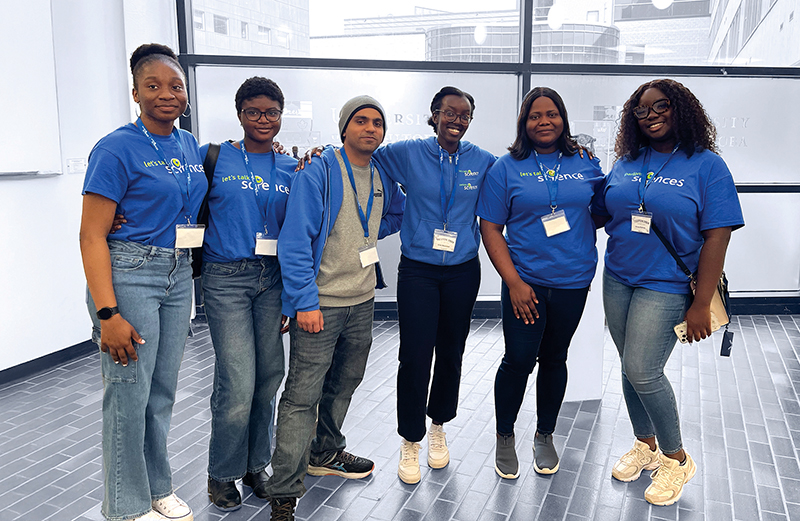
Another challenge students often face is the inability to picture themselves doing a STEM-based job. “Many students still think of science in very stereotypical ways,” says Colleen Babenko, Director of Marketing Communications at Let’s Talk Science. “Popular media is portraying more diverse STEM-based jobs than they used to, but not as many as they could.” One solution to this challenge is to provide students with access to role models who use their STEM knowledge and skills in ways that the students may never have thought about.
For example, the Let’s Talk Science Outreach program connects classrooms with post-secondary student volunteers in diverse STEM-based fields. These passionate students, from both universities and colleges, serve as invaluable role models to students. Not only is their love of STEM contagious, but they are also living proof that people from all walks of life can succeed in STEM. This role-modelling is especially critical for at-risk and marginalized youth.
Understanding the Pathways to STEM Jobs
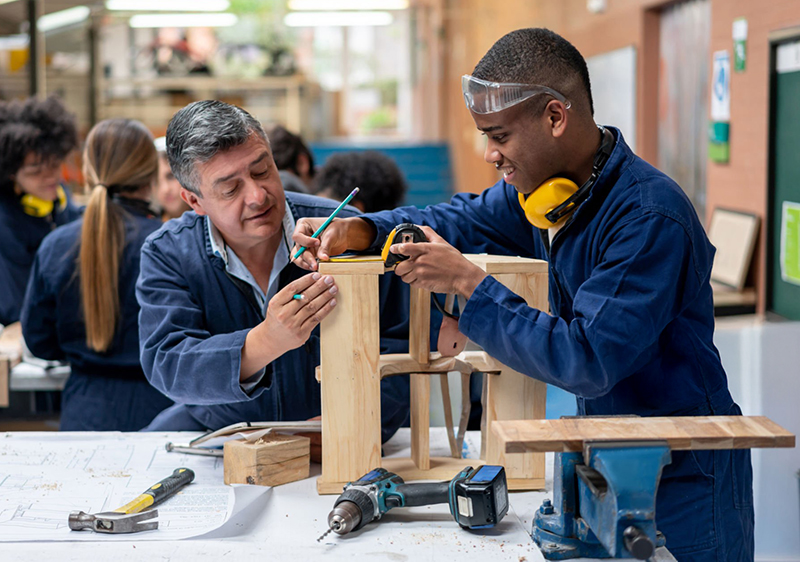
Even today, many students and parents continue to assume that every STEM-based job requires a university degree. “This is a common misconception that needs to be addressed,” said Babenko. University degrees are still required for many traditional STEM-based jobs such as researchers, health care workers, science teachers and engineers, However, jobs that require training through a post-secondary institution such as a community college or trade school or even other jobs that focus on practical, hands-on tasks where on-the-job training through apprenticeships are common, still require STEM skills to be successful.
DID YOU KNOW?
The Canadian Armed Forces offers on-the-job training and paid post-secondary education programs, all while earning a salary. Students 16 years and older are eligible to join.
By helping students to understand that there are many pathways to STEM jobs, we can open their eyes to new career possibilities.
Let’s Talk Careers!
Canada is now experiencing the turbulence in labour markets being felt worldwide. According to the World Economic Forum’s The Future of Jobs Report 2025, this turbulence is driven by technological change, geoeconomic fragmentation, economic uncertainty, demographic shifts and climate change. This is why now, more than ever, it is critically important for youth and educators to become more aware of, and embrace, the changing nature of work and the diverse range of in-demand jobs that require STEM.
To help students, parents, and guidance counsellors learn more about the breadth and depth of STEM-based careers, Let’s Talk Science provides free-of-charge, access to an extensive STEM careers database. Here, students can explore the collection of over 700 bilingual career profiles. In each profile, the person describes why they love what they do, what motivates them, and how their job makes a difference in the world. They also describe their educational and workplace journeys.
To take these profiles to the next level, Let’s Talk Science co-presents the Let’s Talk Careers competition with ChatterHigh, Skills Canada, NGen, NAV CANADA, and the Quantum Algorithms Institute. The competition is an opportunity for middle and high school students and schools to win prizes while becoming more informed about career and post-secondary options after high school. It’s free and easy for all Canadian students and schools to participate.
DID YOU KNOW?
Over the course of the 2024-25 competition, over 14,500 students collectively answered more than 1.5 million career questions while exploring post-secondary and career web pages!

The date of the spring edition of the Let’s Talk Careers competition is April 13 to May 22, 2026.
In summary, it’s our role as guidance counsellors, educators and parents to help the youth of today see themselves in a career that requires STEM skills and to encourage them to take all the math and science courses they can in high school, because they never know where their career path will take them.
Related Resources from Let’s Talk Science
Farming in space, custom designing 3D-printed organs for transplant, and building robots that do the jobs you don’t want to do – that’s not science fiction, that’s a real job! This page includes videos and career profiles for some unique jobs.
By: Kim Taylor, Let’s Talk Science