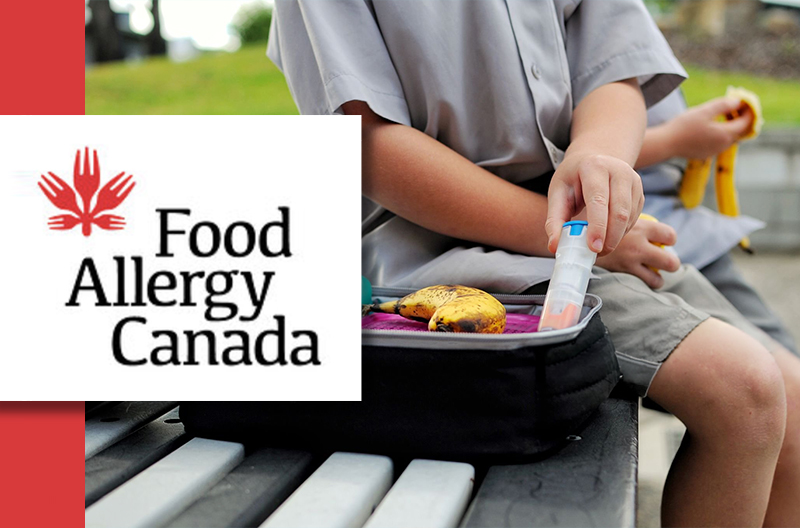
Food Allergy Canada calls on provinces to follow Alberta’s lead and mandate stock epinephrine in schools
Peer-reviewed study shows Alberta’s landmark legislation nearly doubled pre-hospital epinephrine use in school anaphylaxis cases; new polling finds 9 in 10 Canadians want schools to have epinephrine devices on hand
TORONTO, Aug. 26, 2026 /CNW/ — With students heading back to school across Canada, new peer-reviewed research is showing how school legislation can help close critical gaps in anaphylaxis preparedness, including access to epinephrine and education for school personnel.
The study, published in the International Archives of Allergy and Immunology, found that Alberta’s 2020 Protection of Students with Life-Threatening Allergies Act, which includes stock epinephrine in schools, was associated with a near doubling of pre-hospital epinephrine use among children experiencing severe allergic reactions (anaphylaxis) at school — rising from 35.7% before the law to 64.5% after.
Stock epinephrine is like having a public defibrillator (AED) or a first aid kit: it is not prescribed to a specific person but is available in emergencies for anyone who needs it. When anaphylaxis occurs prompt epinephrine use is critical, and having stock epinephrine on hand can help ensure life-saving treatment is accessible the moment it’s needed, bridging critical gaps in safety.
No similar increase in pre-hospital epinephrine use was seen over the same period in Quebec and Ontario, which do not have comparable stock epinephrine requirements. The research notes that Alberta saw a dramatic increase of anaphylaxis education in the year the legislation was enacted. Completion rates of Food Allergy Canada’s anaphylaxis training course designed for teachers and school staff, AllergyAware.ca, increased by 700% in the year the legislation took effect, with elevated completion rates continuing in subsequent years.
Since 2015, the AllergyAware.ca schools course has been completed more than 375,000 times across Canada. Food Allergy Canada’s free, self-paced online course helps school personnel recognize and respond to anaphylaxis, with more than 95% of participants reporting they would recommend it to others.
Together, the findings point to the potential for legislation to drive both access to life-saving treatment and the education needed to use it effectively.
“The findings are important because they show that legislation can influence not only access to epinephrine, but also preparedness to recognize and respond to anaphylaxis,” said Dr. Moshe Ben-Shoshan, allergist and immunologist at the Montreal Children’s Hospital and lead author of the study. “A comprehensive approach can make a meaningful difference in how anaphylaxis is managed in schools.”
Legislation can close critical gaps
Food Allergy Canada says the findings reinforce the need for provinces to act.
“Having epinephrine available is only part of the solution. People need to know how to recognize anaphylaxis, understand that epinephrine should be given promptly, and have access to it when an emergency occurs,” said Jennifer Gerdts, Executive Director of Food Allergy Canada. “Legislation can put both pieces in place — ensuring schools have the education, training, and protocols to respond, while making epinephrine readily accessible when it is needed.”
Alberta is currently the only province with legislation requiring schools to have stock epinephrine.
Canadians support action
Recent Leger polling conducted for Food Allergy Canada shows strong public support for broader access to epinephrine and greater anaphylaxis education:
- 90% of Canadians believe schools should have epinephrine available for emergency use.
- 83% agree that life-saving treatment for serious allergic reactions should be as accessible in public places as an AED is for cardiac emergencies.
- Yet only 63% say they would feel confident recognizing the signs of anaphylaxis in someone else.
The findings highlight a gap between public support and current policy — and the continued need for education alongside access to epinephrine.
A critical moment: Back to school
Food allergy affects more than 600,000 Canadian children, or roughly three students in every classroom of 30. As students return to school this fall, Food Allergy Canada is calling on:
- Provincial governments to follow Alberta’s lead and mandate stock epinephrine and anaphylaxis education in schools.
- School boards and educators to complete AllergyAware.ca training before the school year begins.
- Teachers to use Food Allergy Canada’s free, curriculum-linked All About Food Allergy student program to help students build understanding, confidence and inclusion.
“Legislation can help ensure that every school has both the tools and the knowledge needed to respond to anaphylaxis,” added Gerdts. “The evidence is growing, Canadians support action, and children are heading back to school. It’s time for every province to act.”
Reference
Study: Effectiveness of a Provincial Law to Improve Epinephrine Use for Anaphylaxis in Schools in Alberta, Canada: A Pre-Post Study
Polling data cited in this release is from an online survey of 1,521 Canadian residents aged 18+, conducted by Leger from April 24-26, 2026. A probability sample of this size would yield a margin of error of no more than ±2.5%, 19 times out of 20.
About Food Allergy Canada
Food Allergy Canada is a national non-profit and Canada’s leading patient organization committed to educating, supporting, and advocating for the more than three million Canadians impacted by food allergy.
SOURCE Food Allergy Canada
Media contact: Beatrice Povolo, Food Allergy Canada, bpovolo@foodallergycanada.ca