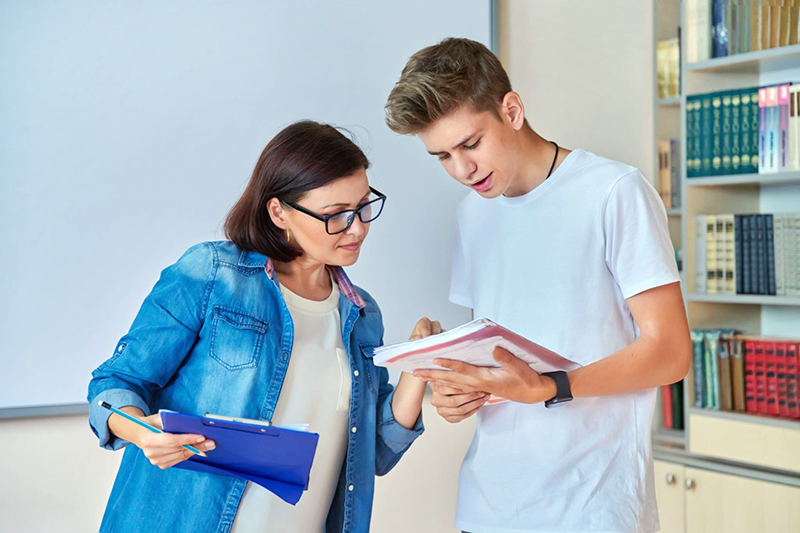
The purpose of this article is to both review key counselling skills and share why they are essential in school counselling. The conversation aims to drive home the reality that being a good school counsellor in the high school setting relies more on the mastery of the basics than upon advanced skills or theories. Moreover, this article hopes to delve deeper into school counselling as a distinct clinical space and how basic counselling skills are a core feature of that space and clinical context.
Introduction
Part of being a school counsellor – in any capacity or level of education – is the role of hearing. We hear the stories of our students’ joys, their sorrows, their challenges, their victories. In many ways, we hear their developing life and heart through our presence and interventions. Therefore, if we as school counsellors are going to properly support these growing hearts in our students, we must remember the counselling skills which impact their development. This article aims to take a moment to reflect on the importance of counselling skills for high school counselling. I also intend to share some of the basic counselling skills which I find helpful to remember based on my experience of working as a counsellor in a high school setting. For this article I will be limiting our reflection to working with high school age students, as that is my current area of work, yet several of these reflections translate to working with other age groups. My goal is not only to share from my experience, but also to provide us with a moment to reflect on how important our basic counselling skills are in supporting high school students.
Maybe the Basics are not so “Basic”?
I know, it sounds cliché, but I believe that basic counseling skills are not all that basic. By basic counselling skills, I am referring to the competencies which are the foundation for working with clients in any counselling of psychology related work. Skills such as attending, reflecting, listening, questioning, clarifying, and challenging or carefrontation are the core of any effective counselling relationship (Nesbit Sbanotto, 2016). These basic counselling skills – among others – are the core of our work as school counsellors. If I have learned one thing in school counselling work, it is that these “basic” counselling skills are what makes or breaks good school counselling. In other words, when the rubber hits the road in a high school counselling office, mastering the basics is necessary.
A reason I find that our basic counselling skills are effective is partly since as school counsellors in high schools, we tend to be general practitioners rather than specialists. What do I mean? I mean that as opposed to working in private practice, or specialized clinics, counselling in a high school setting exposes us to a broad range of cases and needs requiring effective skills which work for a broad number of individuals. Part of the reason basic counselling skills are considered basic is because they effective interventions which help a broad number of people in different situations (Nesbit Sbanotto, 2016). In other words, our basic counselling skills are our specialized tools for working effectively in a school context.
A second reason I think school counselling calls for special attention to basic counselling skills for effective is also related to the varied types of services we offer in a typical school setting. Oftentimes, we are offering different levels of support for different needs. This rapid switch between different services or needs in one school day is connected to what makes school counselling a distinct clinical space from perhaps other settings. For example, over lunch breaks I may be offering walk-in career counselling. Yet, during regular school periods I may be offering either short term or longer-term counselling follow up with individual students depending on the students needs. This means that our basic counselling skills are some of the key interventions we can offer effectively regardless of the type of service we are offering, which as we know can change rapidly in high-school settings. Relying solely on a particular method with advanced skills may not always lead to appropriate intervention for a high-school student. However, by using fundamental counselling skills, we consistently provide ethical, professional, and effective initial support.
A final reality which we must highlight is that research demonstrates the effectiveness of basic counselling skills and approaches for working with children and adolescents in counselling (Smith-adcock & Tucker, 2023). For instance, Smith-Adcock and Tucker (2023) highlight the importance of remaining focused on the child/adolescent in front of us. The best way to be effective at doing this is focusing developing a strong therapeutic relationship – which requires a mastery of our basic counselling skills (Smith-adcock & Tucker, 2023). In other words, using basic counselling skills is not a cop out from using advanced skills, it is evidence-based practice for working with children and adolescents.
These three reasons – among many possible others – provide me with an important validation as a busy high school counsellor. We are doing our job well if we take the time to master our basic counselling skills and use them effectively and ethically with our students. With this validation in mind, I want to share four basic skills I find myself constantly using and developing in my high school counselling work.
4 important skills for counselling in high school settings
Listening: A supervisor of mine once reminded me that good listening is an intervention. The more I work in a high school setting and with a broad range of student needs the more I have come to know this is true. One minute I’m with a student navigating career change, and the next student I can be helping them process a recent loss. What our high school students need first and foremost before any change can happen is someone who truly listens with empathy and can reflect what the student is experiencing adequately (Smith-adcock & Tucker, 2023). Sometimes, we don’t even need to break out other interventions because all our student needed was an empathetic and understanding response.
Questions: How we ask questions is so important as a school counsellor. I have learned the hard way that asking the wrong question at the wrong time can quickly lead to a setback or resistance in my school counselling office. Beyond the standard open versus closed question, I have also found it important to learn how to ask questions which are also culturally, and trauma informed. We know that adolescents tend to not like confrontation, so asking our questions in an open and respectful way is needed if we are going to prevent them from getting defensive (Smith-adcock & Tucker, 2023). It is crucial that we are aware and practice the art of asking good questions which promote trust. We also want to pay attention to the pacing of our questions so that the student does not feel like we are interrogating them rather than trying to understand them (Smith-adcock & Tucker, 2023). If we find asking the right questions difficult, we may benefit from reviewing the types of questions we ask with a colleague or supervisor and see what changes we can make.
Psychological Education: For school settings in general, I have found that offering sound psychological education is part of effective school counselling. High school students often have lots of questions and having a safe place to address those questions as well as their experiences is necessary. We know that developmentally speaking, having good self-knowledge and understanding supports child and adolescent development (Smith-adcock & Tucker, 2023), this means that we can do a lot to support our high school students simply by giving them the time to respond to their questions and provide understanding, explanation, resources and strategies to navigate their experiences.
Carefrontation: Part of our student opportunities for growth relates to our ability to help them patiently see the places where they may be avoiding something or not seeing what would help them manage their experience differently. This is where carefrontation (also called challenging or confrontation) is needed to help our students face the discrepancies in their lives in a way which gives them agency to think and problem solve through their resistance (Nesbit Sbanotto, 2016). Therefore, possessing the appropriate counselling tools to support students in addressing their resistance or defences not only benefits their current development but also provides valuable skills that will assist them as they transition into adulthood.
Conclusion
For school counsellors working in high schools, we benefit from reflecting on the intervention skills which help us to do our school counselling work well. While different settings have different particularities, it is my conviction that school counselling requires us to master the basic skills of counselling. In mastering these skills, we remain adaptable and effective in responding to the changing needs of our students, to a broader range of issues which require professional support, and to the changes in school counselling services. In this article we reflected on the necessity of mastering our basic skills of counselling and review some of the skills which I find I use the most. Hopefully, this reflection encourages us to take time to go back to the basics and see which skills help us as we continue to support our students.
Justin Bertrand is a counsellor in academic training at the high school level in Quebec, with over a decade of counselling experience across diverse settings. He holds a Master of Divinity and is currently a candidate for the MA in Counselling and Spiritual Care at McMaster Divinity College.
Bibliography
Nesbit Sbanotto, E. A. (2016). Skills for Effective Counseling: A Faith-Based Integration. Downers Grove, IL: InterVarsity Press.
Smith-adcock, S., & Tucker, C. (2023). Counseling Children And Adolescents; Connecting Theory, Development, and Diversity (2nd ed. ed.). Thousand Oaks, California: SAGE Publications, Inc