
Agriculture has a perception problem when it comes to careers.
According to a 2023 report1 prepared for the Canadian Agricultural Human Resource Council (CAHRC) and the Canadian Council for Food Integrity that surveyed Canadians aged 16-65, many Canadians don’t know much about the agricultural sector, and what they do know is outdated and stereotypical. So, what are these perceptions, and how are they influencing students’ career choices?
The Perceptions
Agriculture = Traditional Farming
The report found that more than half of Canadians (54%) cannot name an agriculture job other than farmer; however, career awareness varied widely among those surveyed. Immigrants and Indigenous Peoples reported higher familiarity with most agriculture-related career areas. Urban residents were more familiar with food science (34%) and science careers (40%), while Rural residents were more likely to be familiar with farming careers (49%). Students aged 16–24 were mainly aware of agricultural science careers (51%), and parents of teenagers aged 14–17 were most familiar with farming (47%), food and beverage manufacturing (47%), and the agriculture sector overall (38%). Since career choices are often shaped by awareness, the lack of awareness of many of the jobs in agriculture will limit students’ ability to pursue careers in many parts of the sector, leaving these critical jobs unfilled.
Agriculture = Physically Demanding and Unsafe
Nearly three in ten Canadians who said they were at least somewhat familiar with jobs in agriculture were unable to describe any job characteristics. Among those who could describe agricultural jobs, more than a quarter believed that agricultural jobs were physically demanding. Almost half of those who expressed concerns about careers in agriculture were worried about the health and well-being of food system workers, and a third were worried about workers’ safety. Since many of today’s students are not interested in jobs that are dirty or dangerous, this perception prevents many students from considering agricultural careers.

Agriculture = Low Wages
In the report, many respondents believed that agricultural wages were low. Only 17% of the respondents strongly believed that agriculture offered competitive pay and benefits, and only 7% strongly agreed with the statement “Jobs in agriculture pay well”. If people don’t believe that jobs in agriculture pay well, then they may be less likely to consider them.
The Need
Agriculture is a critical industry in Canada with a large workforce. According to Agriculture and Agri-Food Canada2, in 2024, the agri-food industry supported approximately 2.3 million jobs, which is one-ninth of all Canadian jobs. Added to this are the many positions that are being added all the time. The CAHRC projects that more than 100,000 agriculture and agri-food positions could be vacant by 2030,and more than 85,000 workers are expected to retire, creating significant demand for skilled professionals across the industry3.
But career exploration can no longer simply be about helping students find a job. Today’s world faces major challenges in food, including the impacts of climate change, food security, food supply chains, and food sovereignty. This is why career exploration must also empower young people to discover how their skills, passions, and potential can help solve society’s most pressing agri-food challenges.
The Solutions
So, how can we help students understand that today’s agri-food sector is a diverse, innovative industry that offers careers in science, technology, engineering, and math, among others? Here are a few of the ways.
Show students that agriculture is more than farming
One of the simplest ways to shift students’ thinking is to introduce agriculture through the careers they already recognize and value. A student interested in coding might be surprised to learn about artificial intelligence software developers for livestock management or geospatial soil analysts. A student drawn to biology might connect with food science, veterinary technology, biotechnology or nutrition. By starting with students’ interests, we can help them see agriculture as a career pathway with many diverse opportunities.
Replace stereotypes with real examples
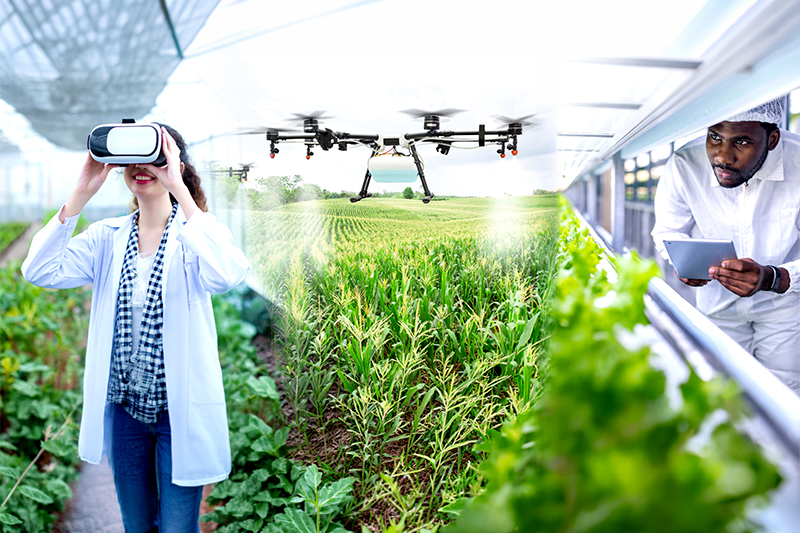
To get a real sense of diverse agriculture careers, students need exposure to a broad range of roles in the sector. Classroom discussions, career panels, virtual field trips, guest speakers, hands-on activities, and career exploration tools, such as Let’s Talk Science career profiles, can all help students meet the people behind the work. These experiences make it easier for students to picture themselves in careers that involve drones, sensors, robotics, lab research, food safety, climate solutions, animal care, supply chains, sustainable technology, and more.
Make career exploration practical and visible
A person does not need to be an agriculture expert to open students’ eyes to the possibilities. For example, teachers could add agri-food examples to STEM lessons, guidance departments could feature agriculture careers during career days, and parents could encourage their children to explore career profiles or meet people in the local community. Resources such as Let’s Talk Science’s Future of Food offer practical ways to do these things.
Be honest about pay, skills, and opportunity
Because some people assume agricultural jobs are low-paying or low-skilled, career conversations should emphasize the education, training, and specialized skills behind today’s agri-food roles. The sector needs people who understand technology, data, engineering, genetics, food, mechanical systems, computer programming, and more. It also needs problem-solvers, communicators, critical thinkers, and leaders. With Canada facing a growing need for skilled workers in agriculture, students should know that this is not a shrinking field but a sector actively looking for the next generation of talent.
“Agriculture today is one of Canada’s most dynamic and technology-driven industries. From precision agriculture and artificial intelligence to biotechnology, robotics and data science, the sector needs graduates with strong STEM skills who are ready to solve complex global challenges. That’s why many of our students receive job offers before they graduate – the demand for skilled talent spans every part of the food system. Investing in STEM education isn’t just about preparing the next generation of scientists; it’s about building the workforce that will strengthen food security, advance innovation and support a sustainable future for agriculture.”
– Heather Bruce, Dean and Campus Principal, Dalhousie’s Faculty of Agriculture.
In Summary
To replace misconceptions with an accurate understanding, students need repeated opportunities to see what agriculture looks like today. A single lesson or career fair may spark curiosity, but ongoing exposure builds deeper awareness. When students see agriculture as innovative, skilled, meaningful, and future-focused, they can discover career paths they may never have considered while helping Canada build the workforce needed for a stronger, more sustainable food future.
References
1 Canadian Agricultural Human Resource Council (CAHRC). (2023, Oct.) Identifying and Addressing Barriers to Careers in Agriculture: Final Report.
2 Agriculture and Agri-food Canada. (Last updated 2025-08-14). Overview of Canada’s agriculture and agri-food sector.
3 Vézina, S., Morency, J-D., Martel, L., and F. Pelletier. (2024). Canadian labouhttps://www150.statcan.gc.ca/n1/pub/75-006-x/2024001/article/00005-fra.htmr force: What will happen once baby boomers retire? Government of Canada.
By: Kim Taylor, Staff Writer at Let’s Talk Science